
01 · What it is
Seamless integration, scalable & cost-efficient
Keiryo transformed complex polymer rheology science into a practical plastic processing technology that boosts both environmental and economic sustainability. The FENIC process aligns polymer molecules in the melt, triggering structural changes during flow. This results in advanced, efficient material structures that enhance performance, allowing for less material use while maintaining the same product quality.

BEFORE

AFTER
02 · Why it works
Rooted in proven science
01
Rooted in proven science
FENIC is built on widely studied, well-established scientific principles of Flow Enhanced Nucleation and Induced Crystallisation. Our expert scientific board, comprised of leading minds in the field, guides the development and reduce-to-practice of this cutting-edge technology, ensuring it remains at the forefront of innovation and sustainability in plastic processing.
Scientific communications per year on flow-induced crystallisation, 1971 to 2026 (2026 to date). Keiryo patent filings in dark green, including a new family filed in 2026. Click the chart to enlarge.

02
Compatibility with existing manufacturing processes
The technology is suitable with currently utilised commodity resins, for both amorphous (such as PC, PS et al) and semi-crystalline (such as PET, PP, etc.) polymers, on industrially relevant machinery.

03
Designed for seamless integration with flow-based processing
FENIC harnesses the power of flow for methods like injection moulding, extrusion, blow moulding, and film extrusion. With its rheology-optimised 3D-printable design, the processing tool ensures compatibility with existing machinery.
03 · Fitting
Easy to fit in your existing line
The FENIC insert sits inside the hot-runner nozzle tip, in the last millimetres before the gate: one insert at each gate. It keeps your machine, mould and line as they are, and your team fits it in four steps, with minimum downtime.
Unscrew the nozzle tip from the nozzle housing. The valve pin stays in place in the hot runner.
Slide the FENIC insert into the nozzle tip.
Slide the nozzle tip with its insert back over the valve pin. The pin passes through the insert, so the gate shuts off as before.
Screw the nozzle tip back into the housing and restart production.
04 · What it changes
Performance follows morphology
Barrier performance
Smaller, evenly spread crystals in a polymer create a strong, consistent barrier throughout the material. This layout forms a labyrinth that makes it harder for gas or moisture to pass through, unlike large, randomly placed crystals that can leave gaps. The result is a reliable, high-performance barrier that outperforms materials with larger, less frequent crystals.
Thermal resistance
The uniform distribution of smaller crystals contributes to balanced thermal behaviour across the polymer structure. These smaller crystals help create a network that can distribute heat more evenly, preventing localised areas of excessive shrinkage or deformation. This consistency ensures that the material maintains its thermal resistance more evenly, unlike occasional large crystals, which may create uneven thermal responses with more susceptible amorphous regions in between.
Mechanical strength
Smaller, well-distributed crystals support consistent mechanical strength by reinforcing the PET material evenly throughout its mass. This prevents stress concentration points that can develop when only a few large crystals are present, which could leave the surrounding amorphous areas prone to compression or collapse under load. The uniform crystalline structure provided by smaller crystals ensures that the material can withstand mechanical stresses more evenly, reducing the risk of localised failure and improving overall resilience.
05 · How we measure it
Characterisation methods
Our characterisation platform analyses polymer morphology in depth at every stage of processing, always against industry standards. This confirms that “morphology follows rheology” and ensures the consistent performance of FENIC in industrial applications. By working with leading experts worldwide, we validate results objectively and keep our insights clear and unbiased.

Optical

Thermal

Magnetic

X-ray
Functional performance properties
Each packaging segment needs its own mix of barrier, thermal and mechanical performance. These are the properties FENIC improves for each one.

Oxygen transmission

Water vapour transmission

Thermal resistance

CO₂ transmission

Top load

Still water

Carbonated soft drinks

Food

Dairy

Juice

Healthcare

Household products
06 · Materials
Processable with virgin and recycled resins

Recycled polymer systems
Our technology is compatible with recycled polymer systems, and does not contribute to the additional degradation or lead to clogging the machinery.

07 · What you gain
Performance increase unlocks two value creation pathways
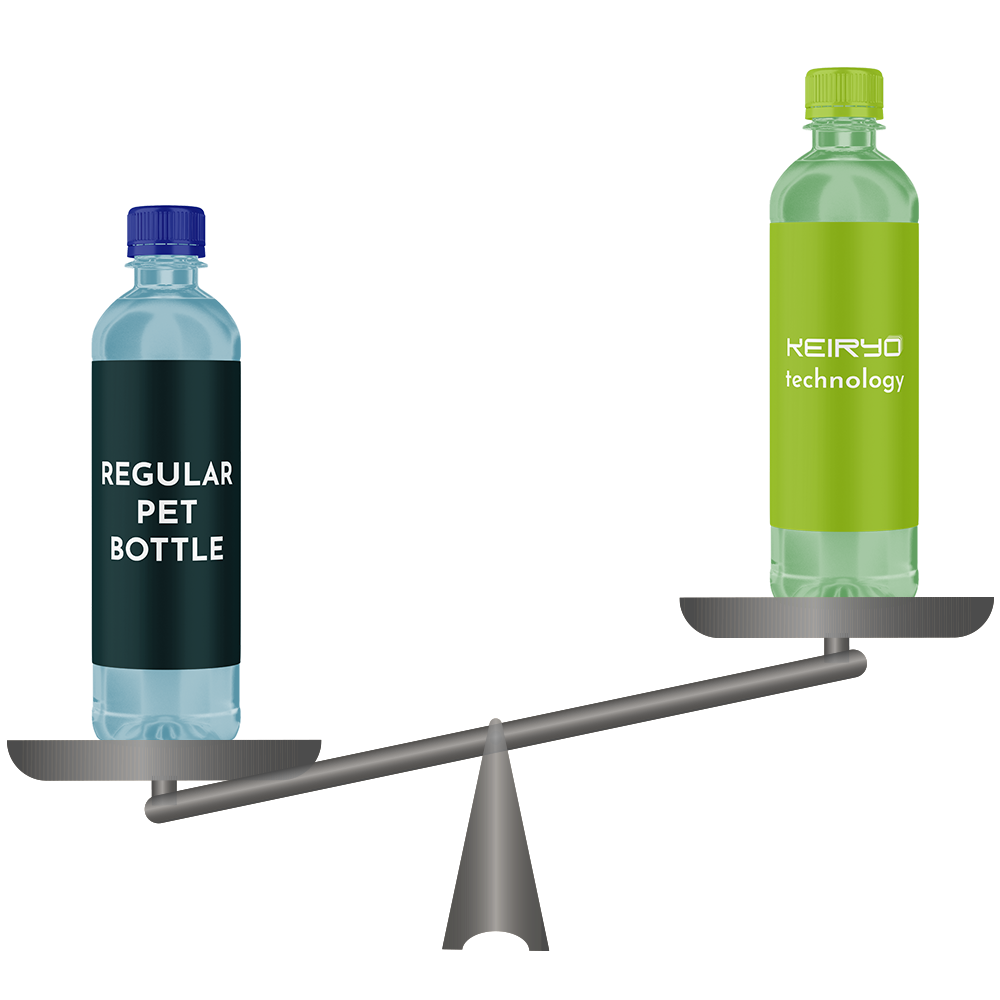
Achieving the same with fewer resources
Reduce weight and maintain the properties
Our patented processing technology leverages advanced polymer rheology science to optimise the functional performance of materials, allowing us to reduce material usage while maintaining critical properties. This means achieving the same product performance with fewer resources, offering significant cost savings and sustainability benefits. Among those benefits:
Reduce transportation costs
Maintain top load mechanical strength
Maintain barrier and thermal properties
Achieving more with the same resources
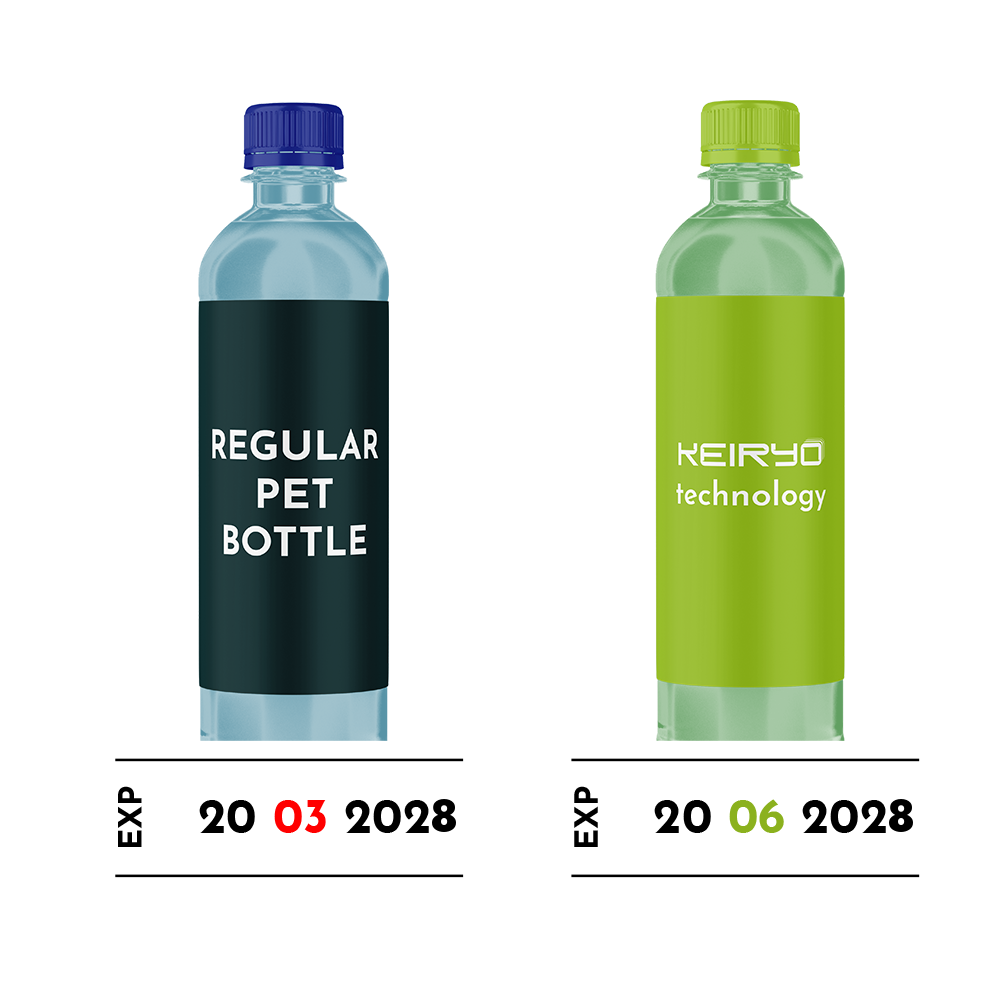
Maintain the weight and increase the properties
FENIC processing technology keeps the material weight the same while significantly improving its functional performance. Among those benefits:
Enhance barrier properties
Increase mechanical strength
Improve thermal properties
From first call to your line in three steps
Built around your part, your material and your figures. You decide at every step.
Access FENIC data
Review our technical reports, from lab work to industrial trials, and see what FENIC can do for your part. The report index is free; full access is subject to contractual terms.
Discuss a bespoke trial
We define the part, the material and the success criteria with you, then run a bespoke trial on your own tool.
Establish technology licensing
Once the results are in, we agree a technology licence so you can run FENIC across your lines, with no capital request.